The Bone Thief: Why Your Skull is Shrinking and How to Stop the Facial Collapse
We spend an incredible amount of time and money obsessing over our skin. we buy the retinoids, the vitamin C serums, and the high-end sunscreens. We treat the "paint" on the house with religious devotion, but we rarely think about the foundation. For women over 35, the real secret to a lifted, youthful face isn't just about collagen. It is about bone.
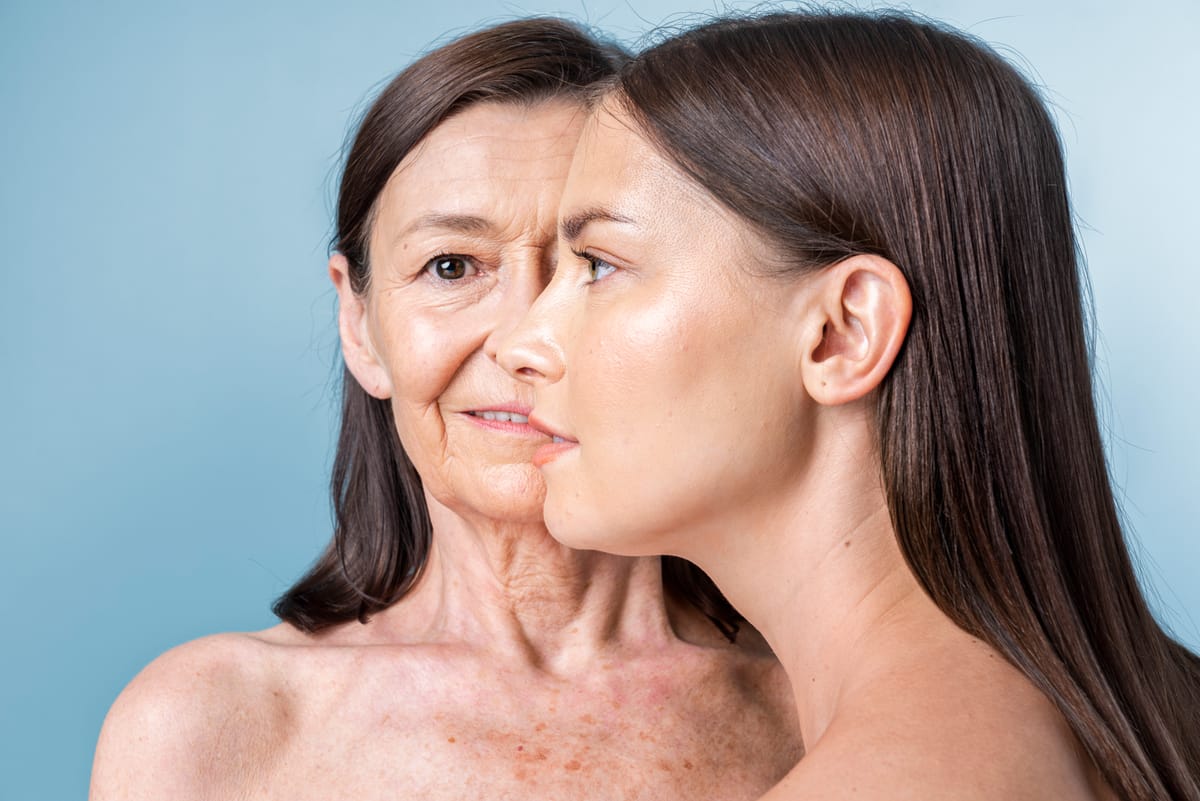
There is a biological process called bone resorption that most people don't talk about until it is too late. As we age, our bones don't just become more fragile; they actually lose volume. In the face, this "shrinking" of the skull is the primary cause of facial collapse. Your eye sockets widen, your jawbone recedes, and your cheekbones begin to flatten. When the bone beneath the surface loses its mass, the skin (no matter how much collagen it has) begins to drape and sag because it no longer has a sturdy frame to sit on.
The Anatomy of the Receding Jaw
If you have noticed that your jawline isn't as crisp as it was five years ago, it might not just be a loss of skin elasticity. Your mandible (jawbone) is highly sensitive to hormonal shifts, especially the drop in estrogen that begins in our late thirties. When the jawbone shrinks, the skin around the chin and neck begins to pool, leading to jowls and a loss of definition.
The same thing happens around the eyes. As the orbital bone (the eye socket) enlarges through resorption, the fat pads around the eyes lose their support and begin to bulge or sink. This is the root cause of deep under-eye hollows and hooded lids. If we want to stay radiant beyond age, we have to address the bone thief before he takes too much.

Actionable Steps to Save Your Scaffolding
The good news is that bone is a living, dynamic tissue. You can influence its density and volume through targeted biohacks and nutritional choices.
- The Vitamin K2 and D3 Synergy: You probably know about Vitamin D, but it is useless for your bones without Vitamin K2. While Vitamin D helps you absorb calcium, Vitamin K2 acts as the GPS that tells that calcium where to go. Specifically, it activates a protein called osteocalcin which binds calcium into the bone matrix. Without K2, that calcium can end up in your arteries instead of your jawbone. Aim for a high-quality K2 (MK-7) supplement daily.
- Mastication as Exercise: Bone responds to mechanical stress. This is why weightlifting is good for your spine. For your face, the "weightlifting" is chewing. Modern diets are too soft. To keep your jawbone strong, you need to chew. Incorporate "tougher" foods like raw carrots or even consider using a mastic gum once a day for ten minutes. This mechanical pressure signals the bone cells in your jaw to stay dense and active.
- Resistance Face Yoga: Don't just move your face; add resistance. When you use your hands to provide resistance while you move your facial muscles, you aren't just toning the muscle. You are applying pressure to the bone beneath it. This "loading" of the facial bones is a powerful way to signal to your body that it needs to maintain that structural mass.

The Long-Term Structural Vision
We are playing a decades-long game. By focusing on bone health now, you are ensuring that your skin has a beautiful, wide, and supportive frame to sit on for the next forty years. This is the difference between looking "over-filled" with injectables and looking naturally structured and lifted.
You can explore the fascinating research on age-related bone loss in the face to see exactly how these changes occur. It turns out that skeletal aging is just as important as skin aging.
Protect your foundation. Feed your bones, stress them intelligently, and refuse to let the bone thief steal your structure. A sharp jawline and high cheekbones are built from the inside out, starting with the very bones that hold you together.